Spring Festival holiday end notice

Dear customers,


The Spring Festival holiday is coming to an end. I hope everyone had a happy and warm holiday! Here, we extend our most sincere greetings and best wishes to every new and old customer!


First of all, we would like to express our gratitude for your continued support and trust. It is because of your strong support that we can continue to grow and become a leader in the wiring harness industry. Thank you for working with us and contributing to our shared success.


In the new year, we will continue to be committed to providing high-quality wire harness products and first-class customer service. Our team will always put the needs of our customers first and strive to meet your every requirement. Whether it is customized wiring harness solutions, efficient production and timely delivery, we will do our best to serve you.


At the same time, we would also like to introduce to you the current development trends of the wiring harness industry. With the continuous advancement of science and technology and the increasing demand for intelligent terminal equipment, wiring harnesses are increasingly used in various fields. The rapid development of the automotive industry, electronic equipment, aerospace, medical equipment and other fields has brought huge opportunities and challenges to the wiring harness industry.


In the global wire harness market, the application of new materials and new processes will become the main development trend. The demand for wire harnesses in special environments such as high temperature, high pressure, high speed, and high frequency continues to grow, and the requirements for materials and processes are also getting higher and higher. For example, new conductive materials, high-temperature and durable insulating materials, and advanced connection technologies will be widely used.


In addition, with the improvement of electronics, the role of wiring harness in smart devices is becoming more and more important. Whether it is smartphones, smart homes or industrial automation, they are all inseparable from efficient and reliable wiring harness systems. Therefore, we will continue to invest in R&D and innovation to meet customer needs for smaller, lighter, and higher-performance wire harness products.


Finally, we sincerely look forward to creating wonderful cooperation opportunities with you! We believe that through our joint efforts and trust, we will be able to achieve greater success in the future.


Thank you for your continued support and trust! We look forward to working with you in the new year to create brilliance together!


Once again, I wish you all a Happy New Year and all the best!


Sincerely,

Shenzhen Smart Connection Co., Ltd.

Talk about the functions, composition and functions of automobile wiring harnesses

The automobile wiring harness runs throughout the entire car. It connects various electrical devices on the car and serves as a medium for power supply and signal transmission of each device. This article mainly introduces the components and functions of automobile wiring harnesses
1What is a wiring harness?
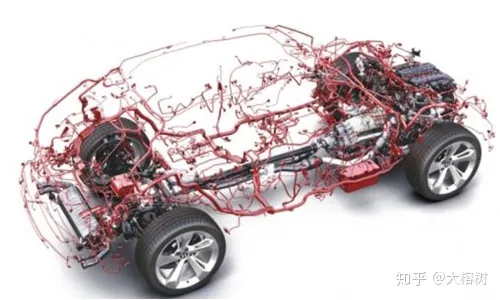
The automobile wiring harness is often compared to the car's neural network system. The automobile wiring harness is the network main body of the automobile circuit. Without the wiring harness, there would be no automobile circuit. The literal meaning of a wire harness is a bundle of wires. The automobile wire harness defines the environment in which the wire harness is used, that is, it is assembled on the car, as shown in the figure below: Figure: Vehicle wiring harness (red part)
The automobile wiring harness runs throughout the entire car. It connects various electrical devices on the car and serves as a medium for power supply and signal transmission of each device. The automobile wiring harness is often compared to the car's neural network system. The automobile wiring harness is the network main body of the automobile circuit. Without the wiring harness, there would be no automobile circuit.

2 Functions and functions of the wiring harness
The wiring harness is an indispensable system-level component in the vehicle. Its function is to provide and distribute power to various systems in the vehicle, and at the same time, it serves as a medium for signal transmission between various components.
To put it bluntly, if a car's electrical components, such as headlights, want to be powered by power, they need to be connected to the battery or generator through a wiring harness to form a power loop. In order for the headlights to light up, the body controller (BCM) must recognize the driver's intention to turn on the light combination switch. The signal interaction between the combination switch and the BCM also needs to pass through the wiring harness.
3 components of automobile wiring harness
The range of low-voltage wiring harness components is wide, including cables, connectors, terminals, fuse boxes, relays, fuses, plastic brackets, metal brackets, PVC insulation tubes, corrugated tubes, heat shrink tubes, sealing rings, rubber sleeves, tapes, Cable ties, protective covers, bolts, etc.
Automotive wiring harnesses are composed of wires, connectors, wire harness wrappings, wire harness fixings (buckles, rubber parts, wire harness brackets, etc.) and wire harness accessories.
electric wire
Wires are the main component of the wiring harness, often called wires. They are the main part of the wiring harness and their main function is to carry the current required by the load. The important parameter of a wire is its current-carrying capacity. The current-carrying capacity of a wire is affected by the wire diameter (the cross-sectional area of the wire conductor), the wire length, the resistivity of the conductor and the ambient temperature.
Connector
Connectors are also called connectors, CONNECTOR, or connectors. Connectors are indispensable components for connecting wire harnesses to other electrical equipment. They are divided into wire harness end connectors and electrical appliance end connectors.
We often hear about male connectors (referred to as male terminals) and female connectors (referred to as female terminals). The connector where the male terminal is located is called a male connector, and the connector where the female terminal is located is called a female connector. The ones on our wiring harness end are usually female connectors.
For wiring harnesses, connectors are relatively precise parts. In order to ensure the connection performance between the wiring harness assembly and electrical equipment, male and female connectors are generally required to be used in sets, that is, the same set of connectors from the same manufacturer is selected. This is important for the car. This is very important for parts and safety parts, such as airbags and ABS.
Connectors can be divided into two categories: waterproof and non-waterproof. At the beginning of the design, PIN pins of different widths are selected according to the current that each PIN pin needs to carry, and then a cavity is formed on the connector to accommodate different PIN pins, thereby forming a Housing that accommodates multiple PINs.
CPA, plastic shell secondary locking mechanism (ConnectorPositionAssurance). Its function is to ensure that the buckle of the primary locking mechanism will not be easily withdrawn after the plastic shell and electrical interface are assembled in place. Due to its special function, CPA must ensure worker operability and legibility when designing. This is CPA is required to be an independent organization on the plastic shell and must also have a special color mark.
Waterproof sealing ring: There are two types of waterproof sealing mechanisms, one is used for sealing between plastic cases, and the other is used for sealing terminal leads.
TPA, terminal secondary locking structure, TerminalPositionAssurance. Not all terminals require a secondary locking structure. VW requires that TPA should be used when the terminal width is less than 2.8mm (including 2.8). In order to ensure the convenience of installation by wire harness factory workers, the color of TPA must also be identifiable and must be used during assembly. It has a clear feel. In order to ensure that the TPA will not automatically enter the locking position when the plastic case is transported to the wiring harness factory, an anti-locking mechanism is necessary on the TPA.
2.5.3 Wire harness wrapping
The main function of wire harness wrapping is to protect the wiring harness. Depending on the material of the wrapping, the main types of wrapping include corrugated pipe, PVC tape, cloth tape, flannel tape, sponge tape and aluminum foil tape.
Due to different materials, the material properties of different wrappings are also inconsistent. Correspondingly, their application conditions and methods on the wire harness assembly are also inconsistent. The specific selection should be based on the specific use environment of the wire harness and its wear resistance, Heat resistance.
4 wire harness fixtures
Unlike other parts on other cars, the wiring harness is a flexible part. The wiring harness cannot be sent in a predetermined shape. Therefore, in order to constrain the layout path of the wiring harness on the entire vehicle, additional parts need to be added to fix the wiring harness. These additional parts The part is the wire harness fixture, which plays the role of fixing the wire harness and constraining the wire harness layout path.
Wire harness fixtures include: cable ties, buckles, rubber sheaths, wire harness brackets, etc. Depending on the installation environment of the wire harness, such as the wiring harness installation space, temperature requirements, waterproof requirements, the shape and shape of each wire harness fixture The materials are not consistent. Even so, the wire harness fixtures also show a trend of standardization, and they are also one of the components that is easier to implement in the selection of wire harness platforms.
5 wire harness accessories
Wire harness accessories refer to other smaller products on the wire harness assembly, such as product labels, fuse clips, etc. on the wire harness assembly.

The connector industry moves toward innovation—providing reliable connections for future technologies

Introduction: Connectors are important basic components of modern technology. They play a vital role in electronic equipment, communication networks, automobiles and other fields. With the development of technology and changing application requirements, the connector industry is facing innovation challenges and opportunities. This article will introduce the latest developments and future development trends in the connector industry.


1. Keep up with high-speed communication needs: With the rapid development of data communications, connectors need to adapt to high-speed and high-bandwidth requirements. To meet this demand, connector manufacturers are developing and launching high-speed connectors to achieve faster data transmission speeds and more reliable signal transmission.


2. Miniaturization and integration trend: With the trend of miniaturization of electronic equipment, connectors also need to become smaller and lighter. Manufacturers are introducing smaller connectors to meet the needs of space-constrained applications. In addition, the rise of integrated connectors has also become a trend in the industry, which has advantages in reducing the number of components and simplifying design.


3. High reliability and durability: In the industrial automation and automotive industries, connectors need to withstand extreme environmental conditions and frequent plugging and unplugging operations. Therefore, high reliability and durability have become the focus of connector manufacturers. By using high-quality materials and rigorous manufacturing processes, connectors provide longer life and more reliable performance, resulting in lower failure rates and lower repair costs.


4. Trends in intelligence and automation: With the rise of the Internet of Things and Industry 4.0, the connector industry is also developing in the direction of intelligence and automation. Some connector manufacturers are researching and launching connectors with intelligent identification, automatic connection and fault monitoring functions to meet the needs of equipment interconnection, data collection and remote monitoring.


5. Sustainable development: The connector industry has also paid increasing attention to sustainable development. Manufacturers are actively adopting environmentally friendly materials, reducing the use of hazardous substances, and reducing energy consumption and waste generation through refined design and optimized processes to improve the environmental friendliness of their products.


Conclusion: As a key technical component, connectors play an important role in all walks of life. With the continuous innovation of technology and the growing demand for applications, the connector industry is also constantly progressing and developing. With the trends in high-speed communications, miniaturization, high reliability, intelligence and sustainable development, we can foresee that in the future connectors will provide more reliable and efficient connection solutions for various cutting-edge technologies and applications.


The importance of connectors

Connectors play a crucial role in various industries and applications. They serve as the bridge that enables the transmission of electrical signals, data, and power between different components, devices, and systems. The significance of connectors can be summarized as follows:

  1. Interconnection: Connectors allow for the interconnection of different electronic components and subsystems, enabling them to communicate and exchange information. They ensure proper and reliable electrical connections, facilitating seamless integration and interoperability.

  2. Reliability: Connectors are designed to provide secure and stable connections. They offer mechanical strength, electrical conductivity, and resistance to environmental factors such as temperature, moisture, and vibration. Reliable connections are essential for the performance, safety, and longevity of systems.

  3. Versatility: Connectors come in various types, sizes, and configurations to meet the diverse needs of different industries and applications. They can be found in consumer electronics, automotive, aerospace, telecommunications, industrial machinery, medical devices, and many other fields.

  4. Ease of installation: Connectors simplify the installation and maintenance of electronic systems. They allow for plug-and-play functionality, enabling easy assembly, disassembly, and replacement of components without the need for specialized tools or expertise.

  5. Scalability: Connectors support scalability and modular designs. They facilitate the addition or removal of components or subsystems, making it easier to upgrade or expand systems without significant redesign or disruption.

  6. Standardization: Connectors often adhere to industry standards and specifications. This standardization ensures compatibility and interchangeability among different components and systems, fostering a competitive market and promoting innovation.

  7. Signal integrity: Connectors play a critical role in maintaining signal integrity, especially in high-speed data transmission applications. They minimize signal loss, crosstalk, and electromagnetic interference, ensuring the fidelity and quality of transmitted signals.

Given these factors, connectors are an essential component in the design, manufacturing, and operation of electronic systems. Their importance lies in their ability to establish reliable, flexible, and efficient connections, enabling the seamless flow of information, power, and signals in various industries and applications.

The Unrivaled Utility of Hardware Terminals Enhancing Connectivity in Every Circuit

Introduction:

In the intricate world of electrical systems, the unsung heroes often lie in the simplicity and efficiency of hardware terminals. These unassuming connectors play a pivotal role in establishing secure and reliable electrical connections across a myriad of applications. Let's delve into the realm of hardware terminals, exploring their diverse utility and the indispensable role they play in the functionality of our everyday devices.

The Versatility of Hardware Terminals:

Hardware terminals, often overlooked, are the backbone of electrical connectivity. From the robust spade terminals to the sleek blade terminals, each variant brings a unique set of features designed to cater to specific wiring needs. Whether it's automotive wiring, industrial machinery, or home electronics, hardware terminals offer a versatile solution for a wide range of applications.

Efficiency in Design:

One of the key attributes that sets hardware terminals apart is their efficiency in design. The spade terminals, with their distinctive forked ends, enable quick and secure connections. On the other hand, blade terminals offer easy insertion and removal, ensuring a hassle-free wiring experience. The simplicity of their design belies their critical role in ensuring the smooth flow of electricity.

Material Matters:

The reliability of hardware terminals is deeply rooted in the materials from which they are crafted. High-conductivity copper is a common choice, providing optimal electrical performance. Some terminals come with corrosion-resistant finishes, extending their lifespan and ensuring a stable connection even in challenging environments.

Applications Across Industries:

The adaptability of hardware terminals shines through in their applications across diverse industries. In automotive settings, they form the backbone of electrical systems, ensuring seamless communication between various components. In industrial machinery, hardware terminals play a crucial role in maintaining the integrity of complex wiring configurations.

Choosing the Right Hardware Terminal:

Selecting the appropriate hardware terminal is paramount for ensuring the efficiency and longevity of electrical connections. Consideration of factors such as wire size, application requirements, and environmental conditions is essential to make an informed choice.

Conclusion:

In the intricate dance of electrons, hardware terminals take center stage, providing the connections that power our modern world. Their simplicity, efficiency, and adaptability make them indispensable in various applications. The next time you power up your car, switch on a light, or use an electronic device, remember the unsung heroes – the hardware terminals – quietly ensuring a seamless flow of electricity.

What are Mini-FAKRA connectors?

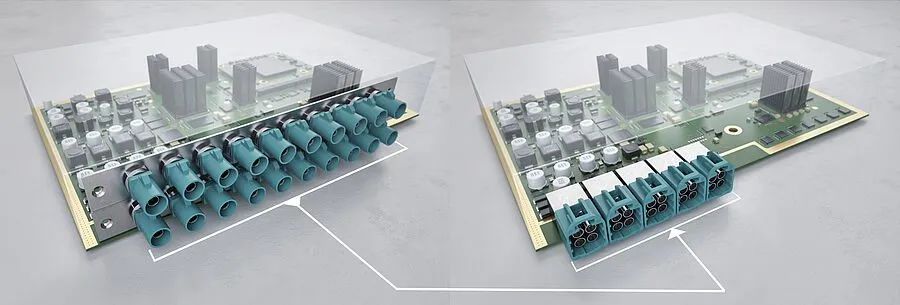
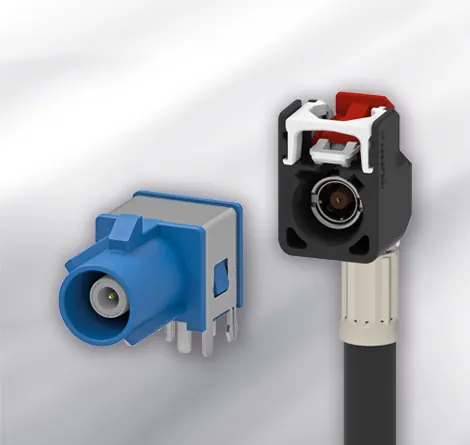
Mini-FAKRA connectors are a scaled down version of the popular FAKRA connectors and are used in automobiles as well as Personal Electric Vehicles (PEVs) and Light Electric Vehicles (LEVs) due to their small size and light weight, which is especially important in electric vehicle applications.

Mini FAKRA: High-speed Mini-FAKRA (HFM) connectors are 80% smaller than FAKRA connectors. (HFM is a registered trademark of Rosenberger). These miniature coaxial connectors are used in many automotive applications including surround view cameras, GPS navigation, autonomous driving, driver assistance systems, high bandwidth infotainment and computing models. Available in straight or right angle versions, they are rugged, lightweight and small in size. They offer data rates up to 28 Gb/s. Type A mini-FAKRA connectors support data transfer up to 20 Gb/s.

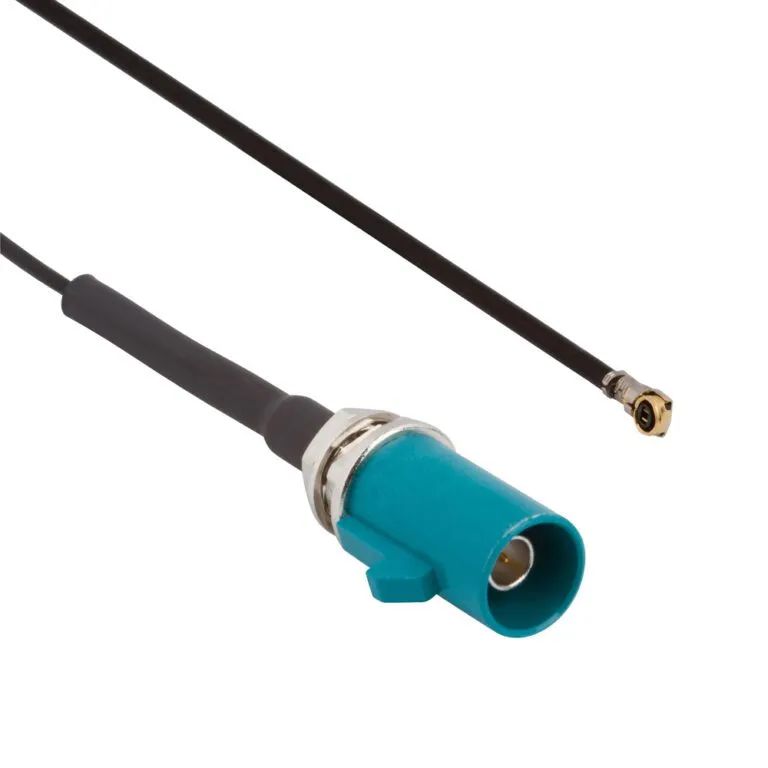
The FAKRA connector, a mainstay of automotive connectivity for the past two decades, is a version of the Subminiature Type B (SMB) coaxial RF connector developed by Rosenberger and standardized by the German Automobile Manufacturers' Council (DAMC).FAKRA is an acronym for Fachkreis Automobile or Working Group Automobile. FAKRA is an acronym for Fachkreis Automobile or Working Group Automobile. These multifunctional connectors are widely used in the global automotive industry, primarily for telematics, security and communication applications. An average connected car contains at least 15 FAKRA connectors.

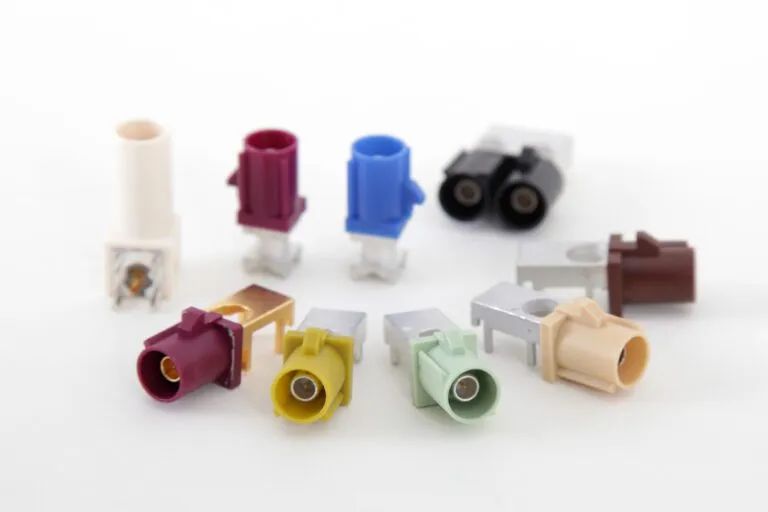
The FAKRA standard defines the interface as well as the mechanical and electrical characteristics of the connector. a FAKRA connector consists of a plug and a socket, which are mated by means of a push-fit mechanism embedded in a plastic housing. An audible locking confirmation lets the operator know that a connection has been established. Some variants include auxiliary locks. They are available in 14 different mechanical layouts. Color coding facilitates identification and prevents mismatches.FAKRA connectors operate at frequencies up to 6 GHz.

FAKRA connectors are used throughout the vehicle for applications such as telematics and GPS navigation, entertainment systems, Bluetooth, cellular, keyless entry, climate control and radio antennas. They are also used in sensor systems for autonomous control. Other non-automotive applications include outdoor routers, industrial process control boxes, machine-to-machine modules and IoT devices.

There are several subtypes of FAKRA connectors: the original FAKRA I connectors are now primarily used in antenna applications. FAKRA II is the second generation of FAKRA and is considered the current basic standard. They are available in a variety of angles and configurations, including IP6K9K sealed and weatherproof versions for outdoor applications. Customized and miniaturized versions are available from some manufacturers.

Mini-FAKRA connector design instructions:

Standardized The FAKRA standard is accepted by major automotive manufacturers and system suppliers worldwide for automotive communications and entertainment applications.FAKRA products comply with ISO 20860-1 and 2, DIN ISO 20860, SAE/USCAR 18 standards.

Configurations FAKRA includes a complete line of application-based configurations with a variety of entry angles, color coding, mechanical keying, and cable name options.

Durability Rugged plastic housings help protect FAKRA connectors from the harsh conditions vehicles face in operation, including debris, weather conditions, shock and vibration. They are designed to handle a temperature range of -40°C to +105°C. Sealed versions are available.

Number of insertions and withdrawals These connectors are designed to handle a minimum of 100 insertions and withdrawals.

Performance FAKRA connectors are designed to perform at operating frequencies up to 6 GHz and can handle 335 volts RMS continuously.

Assembly To meet the demands of automated assembly, FAKRA connectors are optimized for tape and reel packaging. They are also suitable for selective, wave and reflow processing.

Markets, Industries, Applications

FAKRA connectors are used in telematics, safety and communication applications in the automotive industry as well as in non-automotive vehicles such as boats, motorcycles and off-highway heavy equipment. They are used for safety, driver assistance, V2V and other in-vehicle networks.

What Is the Importance of Wiring Harness?

We all use machines in our everyday life without thinking much about how these electronics work efficiently. The importance of wiring harnesses can be seen in all the automobile and electronics industries.

Where is a Wiring Harness Used? 

A wiring harness, also known as a wiring assembly, refers to an integrated and systematic arrangement of cables (wires) within an insulating material. They are built to transmit electrical signals and are used in electrical systems. A diverse combination of wires, electrical tape, straps, and conduits, is used to create a wiring harness. 


Though transmitting electrical signals is the primary goal of a wiring harness, in the bigger picture, these electrical components are much more important than you’d realize. The harness makes connecting to larger components easier by combining the wiring into a single unit for a "drop-in" installation. Instead of multiple cables running in parallel, a wire harness provides a centralized connection point that is safe.

Importance of Wiring Harness 

Now that we know the basic definition of a wiring harness, let us discuss the importance of a wiring harness in detail. Not only will this help you get better insight into its purpose, but you also see how different harnesses can be used in different circumstances. 


Facilitates Application 

Cables or wires connected outside a harness are likely to get messy. A wire harness clears the area of clutter and gives electrical transmission a single source of connection, and a tidy, organized appearance.  Therefore, it is easier to connect a single group of clamped wires to one connection rather than having numerous wires, each connected to a different set of slots.


Quality & Durability 

An important characteristic of wiring harnesses is that they are manufactured using computerized machines reducing the chances of defects. 

These computerized machines also have a system of automatic testing to make them even more secure. Because of the wiring harness’s innate robustness, there is almost no chance of failure. Such advancements in our electrical engineering systems are one of the biggest ways in which the importance of wire harnessing in industries is visible. 


Time-Effective Installation

There are kilometers of wiring required to put together a single piece of equipment. Installing all these wires individually and manually is a daunting task. When all these cables and little parts are integrated into a single apparatus, a tremendous amount of manufacturing time is saved. Such an organized system also reduces the chance of human error. 

Remember that time is money. When you save huge amounts of time in manufacturing, you also save money and effort. Further, in the long run, a wiring harness may play an important role in avoiding future problems.  


Secure Connections 

When wires and cables are bound together systematically in a single harness, a variety of security issues are resolved. The wires are protected from damage from moisture or abrasions as they have a defined position. Wires placed in a non-flexing bundle ensure the optimal utilization of space. Further, a wiring harness is also extremely functional in preventing short circuits and fires, because the harness is always created inside insulated, secure material. 

Manufacturing and Designing Wiring Harness

Three essential parts of a wire harness remain the same. These include: 

  • Wires 
  • Connectors 
  • Terminals


All of these components are important in determining the overall performance and dependability of a wiring harness. Be it the types of connectors used in wiring harness, types of terminals used in wiring harness, or even the types of clips used in wiring harness - little parts make most of the difference. 

You must already know what wires are. Let us unpack the definition of connectors and terminals to understand harnessing better. 


Connectors 

Wire harnesses are connected to power sources or circuits using connectors. These are electromechanical devices whose main function is to create a continuous electrical signal. 


There are two types of electrical equipment you will often come across when speaking of the types of connectors in wiring harness: Male-ended plugs and female-ended jacks.  They usually come in pairs, with the male-ended plugs fitting into the female-ended jacks.  Depending on their application,  they are available in a wide range of sizes, shapes, materials, and qualities. This may include circular, header, pin, crimped, and multitap.


Terminals

Terminals are the pins in connector housings. They are the points where wires in the harness either end or connect to another component. They conduct electricity to secure connections in the harness. The designs, shapes, and sizes of terminals are diverse and are used as per applications. For example, terminals used in engine wiring harness will be different from those used in medical equipment. 

Classified by functions, terminals can be wire-wrapped, soldered, press-fit into a ribbon connector, or crimped connections. They are also classified in terms of shapes, including flagged, ring, spade, hook, quick-disconnect, bullet, and spade.


Conclusion 

A wiring harness refers to a systematic and integrated electrical framework within an insulating material. The importance of wire harnessing in industries can be seen clearly in the multiple applications it has across fields such as automobiles, aeronautics, machinery, construction, and much more. For any student in electronics or aspiring mechanical engineer, understanding wiring harness should be a high priority. 

Here at Skill-Lync, we offer multiple courses in mechanical and electrical engineering. We have a specific course on Automobile Wiring Harness that can help you learn much more about wiring harnesses and help you establish a career. We are here to answer any of your doubts and queries about our courses.


Why ultrasonic metal welding is a necessity for new energy vehicles

There are many factors to consider when deciding on a metal joining method, including both tangible and intangible characteristics. Depending on the application, investments will vary based on connection design, welding materials, geometry, size and dimensions, environmental impact, and the mechanical and electrical integrity required for a given product. It is impossible to cover all connection methods in one article, so we will focus on the automotive wiring harness industry to clarify the differences between crimping, soldering, ultrasonic welding, laser welding and resistance welding.

In some cases, ultrasonic welding may seem like the only solution, or it may not be feasible at all. However, no matter how many variables are considered when choosing a joining method, ultrasonic welding appears to offer better long-term returns than all other viable processes.

The initial investment in ultrasonic metal welding equipment is higher relative to other welding processes such as resistance welding, crimping, and mechanical joining, but lower than laser welding equipment. So why is this technology dominating wire harness manufacturing and becoming a necessity for electric and hybrid vehicle batteries and power distribution systems? Ultrasonic welding of non-ferrous metals has been a proven technology for decades. However, ultrasonic metal welding has dominated the automotive industry since the early 1980s, with automotive wiring harness manufacturers being the largest users of this technology (Figure 1). Due to its efficiency and unparalleled quality, ultrasonic welding has replaced mechanical crimping and resistance welding in all car brands almost as soon as it emerged. The use of ultrasonic welding in automotive wiring harnesses has seen even more rapid growth over the past decade due to the increase in electric vehicles (EVs).

An average vehicle wiring harness contains 180 ultrasonic welded joints, and this number increases with model years. OEMs are adding more electronic features to cars, which requires more connectors. Together, the connectors and wire terminals form a long, complex, heavy-duty wiring harness that controls the entire electrical system throughout the vehicle. Due to the inherent labor intensity of wire processing, wire splicing has been a primary focus of wire harness manufacturing. However, the wire harness industry still uses crimping or resistance welding for applications such as small wire crimping or tin wire splicing. Generally speaking, ultrasonic welding is not feasible for tinned parts or hard materials like steel. This is where resistance welding or laser welding options become viable. However, when it comes to aluminum, which is very popular these days, and when it comes to welding aluminum to another non-ferrous metal, ultrasonic welding is the ultimate choice. Due to its cold fusion welding properties, aluminum can be welded securely without melting or being significantly affected by heat. The benefits of ultrasonic welding apply to thermally conductive materials such as aluminum, copper and magnesium, which can be cumbersome to weld with resistance welders and lasers. Ultrasound is also very useful for joining thin and thick materials.

Ultrasonic is often the best welding process when minimizing thermal interference with material properties is required.

Wire splicing is an excellent example to evaluate some of the joining processes used in today's wire harness manufacturing. Manufacturers have been using the crimping process for years before welding became a viable option. Some OEMs simply use clamps to crimp the wire into the connector. Some are also dipped in a bath of solder to ensure electrical integrity. The disadvantages are the need to add material (many different sized clips), the space required for a dedicated press, the required soldering skills, and the effect on the wire harness due to the mechanical stress and heat generated by the clips and solder.

Therefore, starting with resistance welding and then ultrasonic welding, the welding of wires became very necessary. The cold melt nature of ultrasonic metal welding, its ability to eliminate oxidation before welding, the joining of dissimilar metals, extremely low energy consumption, and the ability to use one machine and the same universal tools to weld a variety of joint sizes are the reasons why ultrasonic metal wire Joints become a convincing factor in globally accepted workmanship. It took several years for wire harness manufacturers to become familiar with the process and adopt the technology. Some switch from crimping to ultrasonic welding, and some use resistance welding before switching to ultrasonic welding. Ultrasonic welding equipment has advantages over other joining methods that still exist today.

The operating/maintenance costs of each joint must be verified simultaneously, but quality is the highest priority. Here are some factors to consider when choosing a connection method:


·Initial investment and quantity


·Output rate


·Consumables


·Power consumption - ultrasonic welding requires 5% of resistance welding


·Additional infrastructure such as water cooling, ventilation and additional electrical installation


·The required floor space for the equipment


·Changes over time


· Setup time for each application


·Mold life and its impact on quality (Figure 2)

Advantages of ultrasonic metal welding


·Low temperature process does not affect material properties


·Pure metallurgical bonding agent suitable for a variety of non-ferrous metal materials


·Ability to weld dissimilar materials


·No consumable materials such as connector clips or solder


·Environmentally friendly technology


·Consistent welding quality, mechanical and electrical performance


·Fast cycle times


·Friendly human-computer interface


·No smoke or chemicals such as lead to ensure operator safety


·process


There are two types of ultrasonic welding methods: metal and plastic. Linear soldering is the more common technique used by equipment manufacturers and is the standard for wire splicing (Figure 3). Twist welding technology can be used for most common applications of linear welding. However, due to its unique features, it has certain advantages in terms of applied geometry and gentle process, leading to wider applications in the market. In fact, this technology is sometimes found to be the only solution for electric vehicle battery manufacturers and high-voltage cable welding (Figure 4). Other examples where torsional ultrasonic welding has proven to be a superior method include busbars, 3D terminals, and integrated gate bipolar transistors (IGBTs).

Ultrasonic welding technology

Examples of current ultrasonic welding electric vehicle applications

working principle:

  The wire is stacked between the vibrating/oscillating tool (ultrasonic generator) and the anvil. They are confined within a predetermined space before static force is applied via the anvil. As oscillations occur, the metal surface heats up and plasticizes, and the strands bond together by mixing with each other at the molecular level (Figure 6). The result is a continuous weld with a fine-grained structure, similar to that of cold-worked metals. The entire process is very fast, with welding typically completed in less than a second


  The most common fusion splicers in use today operate on mechanical vibration at a frequency of 20KHz. The vibrations under the force dissipate any contaminants and initiate cold friction welding until the weld is complete. Due to the friction at the welding interface, the temperature rise of the welding material is less than 30%. Therefore, there is no wire hardening that would make the strands brittle in the weld transition zone. This is one of the many advantages over resistance welding, which often melts material to form a nugget.

Classification and Application of Automotive Connector Connection Interfaces

Automotive wiring harness is the "central nervous system" used to connect automobile circuits. It is a transmission carrier for various energy sources and signals. It is spread across various functional components of the automobile and is the lifeblood of the automobile's network. A connector is an electrical module or unit connected between wire harnesses or electrical appliances, providing a convenient and reliable electrical installation interface for electrical connection. Connectors are usually divided into plug connectors and socket connectors, including adapted plug/socket terminals, plug/socket jackets, and also include CPA structure, TPA structure or PLR structure, and some seals also have seals Rings or sealing plugs and other connection accessories. Of course, in addition to the commonly used connector connections, the wire harnesses are also directly connected through U-shaped joints or ultrasonic welding.

Connections are divided into three categories according to their working principles: form-locking connections, friction-locking connections and material-locking connections. Form-locking connections refer to mutual locking through the shapes of connected parts or additional fixed parts to create The connection function is such as the hole-making bolt connection, the snap hook connection; the friction lock connection refers to the compression of the connected parts to generate friction on the contact surface to prevent the relative movement of the connected parts to achieve the purpose of connection, such as withstanding Tight bolt connections and interference connections that understand directional loads; material locking connections refer to applying fluorine additional materials between the connected parts or connecting parts together through the force between molecules, such as gluing, welding, etc.

Connections are divided into detachable connections and non-detachable connections based on detachability. A detachable connection is a connection that can be disassembled without destroying any part of the connection. Therefore, repeated disassembly and assembly will not affect its performance. For example, the connection of a plug connector is basically a detachable connection. A non-detachable connection is a connection that must be destroyed to break apart at least a certain part of the connection. For example, the connection between the double-layer terminal steel clip and the body, the connection between the terminal and the wire harness, the U-shaped connection or welding between the wire harness and the wire harness are all non-detachable connections.

Everything to know about wiring harness engineering

1.What is a wiring harness?
A wiring harness is a collection of wires, cables, and connectors that are bundled together in a specific arrangement to transmit electrical power and signals between different components and systems in a vehicle, machine, or other equipment. The harness acts as a central nervous system for the equipment, ensuring that all electrical connections are properly organized, protected, and functioning correctly.

Wiring harnesses can range in size and complexity depending on the equipment they are used in. They are commonly used in automobiles, aircraft, construction equipment, and industrial machinery, among other applications. Wiring harnesses can be made from a variety of materials, including copper, aluminum, and synthetic fibers, and can be designed to withstand harsh environmental conditions such as heat, vibration, and moisture.

In addition to providing a neat and organized way to manage electrical connections, wiring harnesses also simplify the installation and maintenance of electrical systems, and can reduce the risk of electrical faults or fires caused by improperly connected wires.
2. Purpose of wiring harness components

Wire harness assemblies can be used for a variety of purposes. Agriculture, automobiles, communications, new energy mobile energy storage, solar photovoltaics, manufacturing and medical industries are all included in the application list. Wire harness assemblies are a common feature found in electrical systems around the world. Without them, modern technology might not be as effective.
3.Basic process of wiring harness design

Requirements gathering

Study & analyze data pack

Schematic design

3D routing & material selection (BOM)

Flattening & manufacturing documents

This includes detailed instructions on the routing of the wires and connectors, as well as any other relevant information, such as torque specifications or heat shrink requirements.

Prototyping and testing

Once the design is complete, the harness is typically prototyped and tested to ensure that it meets the requirements of the target application and any relevant industry standards.
4.Production and quality control

Finally, the harness is produced, and a quality control process is implemented to ensure that each harness is manufactured to the same high standards and meets the necessary performance and reliability requirements.

5.Common errors to avoid in wiring harness design

Improper wire selection

Inadequate strain relief

Improper bundling

Inaccurate labeling

Inadequate testing

By avoiding these common errors, designers can ensure that the wiring harness performs reliably over its lifetime, minimizing the risk of failure and reducing maintenance costs.


6.The most important parts of a wire harness are:

Wire: The signal or current that powers a device is carried by the wire. The voltage or bandwidth that the wire is expected to transmit must be met or exceeded by its capacity. The majority of wires are copper, and they can have a coating of your choice.

Connectors: To connect various types of wires, wire connectors are available in a variety of sizes and varieties. They are typically made of plastic, but they can also be made of ceramic and metal.

Fuses: Fuses prevent power surges from damaging or overloading devices on their receiving side. Different types of fuses are utilized by various harnesses. They typically have a rating of 32 volts or less, but this can change depending on the amperage they have.

Grommets: Insulators, grommets prevent moisture from entering the connector. A grommet can be a part of the connector or be attached to the terminal by itself.

Outer coverings/Insulators: Insulators, also known as tubes and sleeves, offer protection from electrical shock, environmental protection, and some degree of abrasion resistance. They can be made of nylon or polyolefin, among other materials.

Relays: Higher amperage circuits are turned on and off by relays. Harnesses are able to power multiple things because of this quality. They differ according to the required amperage, just like fuses.

Strain Relief: Typically added to the connector's exterior. It is made to stop the force that pulls on the wires in the connector from pulling on the terminal, which could cause a bad connection. At extreme bend radiuses, strain relief can also be added, which can put an excessive amount of force on the wire and the connector's terminal.

Terminals: The metal components that are attached to the end of the wire to be inserted into the connector or to a point on the connecting equipment are referred to as terminals.

Ties: The wires that are contained within the harness are held in place in a particular direction by cable ties and clamps. Additionally, it can be applied to a fixed structure to limit movement.

Locks: To prevent the wire's terminal from being pulled out of the connector, locks are inserted into it. It can also guarantee that the terminal is fully inserted into the connector.

7.Conclusion


It can be difficult to create an electrical drawing for your application that includes all of the necessary information, such as schematics, harness layouts, and service documentation. It necessitates a thorough understanding of all components and influencing factors, not the least of which is an understanding of electrical requirements and limitations. Shenzhen Smart Connection Technology Co., Ltd.specializing in electrical assemblies, can assist in streamlining the procedure and making your final product more effective and efficient. For assistance keeping your project on track, take a look at our wire harness design services.